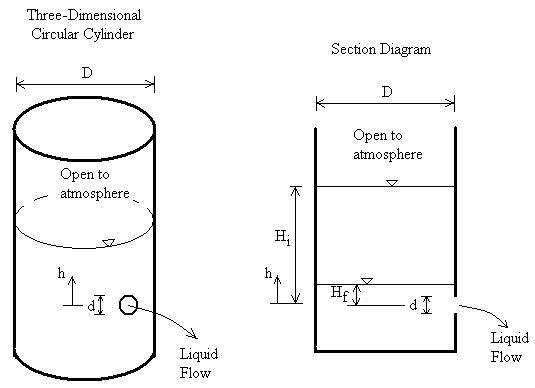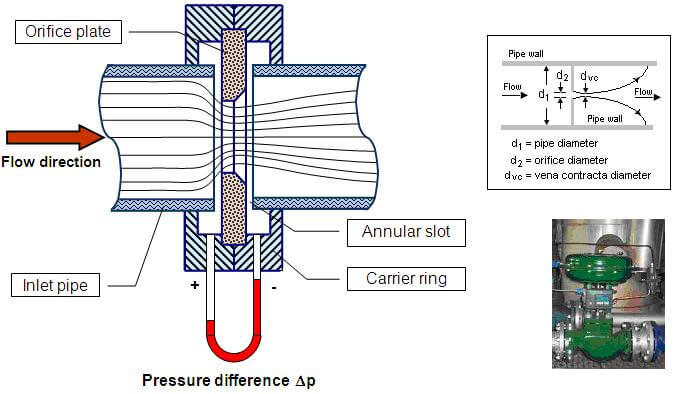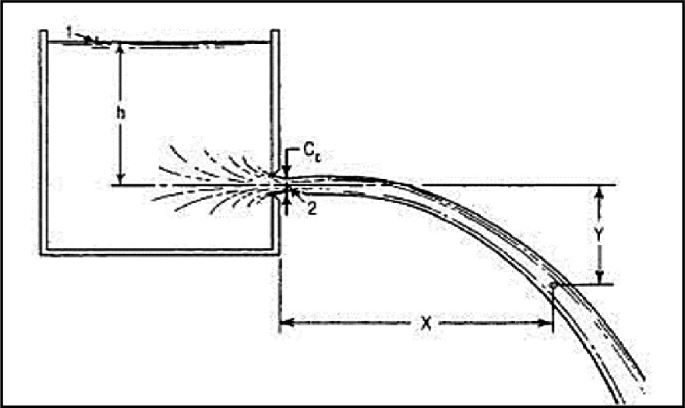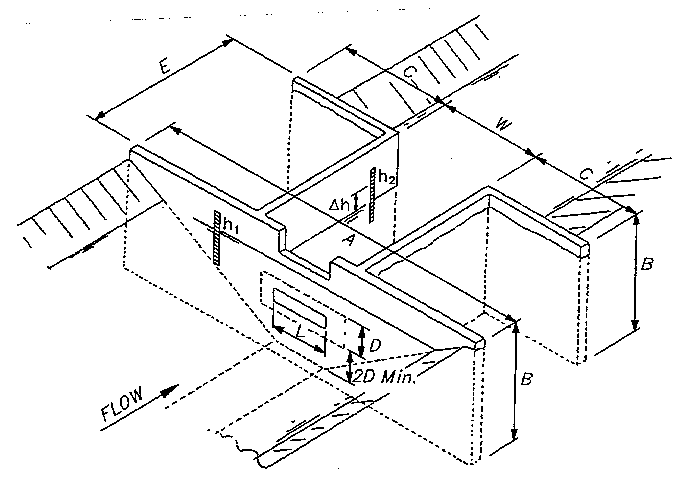

In the study of fluid mechanics and hydraulics, the analysis of flow through orifices is a fundamental topic with significant practical applications. While much of the basic theory focuses on small orifices where the head can be considered constant across the opening, many real-world applications involve large orifices where the variation in head from top to bottom is substantial. This distinction is particularly important for rectangular orifices, which are commonly used in engineering applications such as sluice gates, control structures, and drainage systems.
The key difference between small and large orifices lies in how we treat the hydraulic head across the orifice opening. For small orifices, the head variation is negligible, allowing us to use a simplified approach where the head is considered constant. However, for large orifices, this assumption leads to significant errors, and a more detailed analysis is required that accounts for the variation in head with depth.
Introduction to Large Rectangular Orifices
A large rectangular orifice is defined as an opening where the difference in hydraulic head between the top and bottom edges is significant enough that it cannot be neglected in the analysis. This typically occurs when the height of the orifice is large relative to the head of water above it, or when high accuracy is required in the discharge calculation.
The distinction between small and large orifices is not based on absolute dimensions but rather on the relative magnitude of head variation across the orifice. As a general guideline, when the height of the orifice is greater than about one-third of the head of water above the center of the orifice, the orifice should be treated as a large orifice.
Large rectangular orifices are commonly encountered in:
- Sluice gates in dam spillways
- Control structures in irrigation canals
- Drainage systems for flood control
- Industrial process tanks with large outlet openings
- Water treatment facility control structures
Understanding the proper analysis method for large rectangular orifices is crucial for engineers working in these fields, as incorrect assumptions can lead to significant errors in flow predictions and system design.
Differentiating Small and Large Orifices
To properly understand the analysis of large rectangular orifices, it’s important to first clearly distinguish between small and large orifices and the implications of each classification.
Small Orifices
For a small orifice, the following assumptions are typically made:
- The head of water is considered constant across the entire orifice area
- The head is measured to the center of the orifice
- The discharge can be calculated using the simple formula: Q = C_d × A × √(2gH)
These assumptions are valid when the orifice dimensions are small relative to the head of water, typically when the orifice height is less than about 10-15% of the head above the center of the orifice.
Large Orifices
For large orifices, the assumptions for small orifices break down because:
- The head of water varies significantly from top to bottom of the orifice
- The pressure (and therefore velocity) at the top of the orifice is significantly different from that at the bottom
- The simple formula for small orifices underestimates the actual discharge
To accurately calculate the discharge through a large orifice, we must account for the variation in head across the orifice height by integrating the flow contribution from each differential element of the orifice area.
Integration Method for Large Rectangular Orifices
The proper analysis of flow through a large rectangular orifice requires the use of integration to account for the variation in head across the orifice height. This method involves dividing the orifice into infinitesimally small horizontal strips and calculating the discharge through each strip, then summing these contributions to obtain the total discharge.
Defining the Problem Geometry
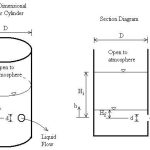
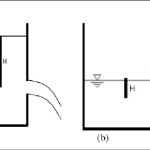
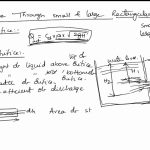
Let’s consider a rectangular orifice with the following characteristics:
- Width of orifice = B (constant across the height)
- Height of orifice = H = (H₂ – H₁), where H₁ is the depth of the top edge and H₂ is the depth of the bottom edge below the free surface
- Free surface of water is at elevation 0
- Top edge of orifice is at depth H₁ below the free surface
- Bottom edge of orifice is at depth H₂ below the free surface
Analyzing a Differential Strip
Consider a small horizontal elementary strip of the orifice at depth h below the free surface, with:
- Height of strip = dh (infinitesimally small)
- Width of strip = B (same as orifice width)
- Area of strip = B × dh
- Head of water above the strip = h
The velocity of flow through this strip can be determined using Torricelli’s equation:
The theoretical discharge through this small strip is:
Accounting for losses through the coefficient of discharge (C_d), the actual discharge through the strip is:
Integrating Across the Orifice Height
To find the total discharge through the entire orifice, we integrate the expression for dQ from the top edge (h = H₁) to the bottom edge (h = H₂) of the orifice:
Since C_d, B, and √(2g) are constants, they can be taken outside the integral:
Evaluating the integral:
Applying the limits:
This gives us the final formula for discharge through a large rectangular orifice:
Where:
- Q = Discharge through the orifice (m³/s)
- C_d = Coefficient of discharge
- B = Width of the orifice (m)
- g = Acceleration due to gravity (9.81 m/s²)
- H₁ = Depth of the top edge of orifice below free surface (m)
- H₂ = Depth of the bottom edge of orifice below free surface (m)
Derivation of the Final Formula
Let’s examine the derivation of the final formula in more detail to understand its components and significance.
Physical Interpretation
The formula Q = (2/3) × C_d × B × √(2g) × [H₂^(3/2) – H₁^(3/2)] has several important physical interpretations:
- The factor (2/3) arises from the integration of the square root function and represents the average effect of the varying head across the orifice height
- The term [H₂^(3/2) – H₁^(3/2)] represents the cumulative effect of the head variation from top to bottom of the orifice
- The coefficient C_d accounts for all losses in the system, including friction, contraction, and turbulence
Comparison with Small Orifice Formula
It’s instructive to compare this formula with the simple formula for small orifices:
For a rectangular orifice of width B and height (H₂ – H₁), the area A = B × (H₂ – H₁), and the head H is typically taken as the head at the center of the orifice:
So the small orifice formula becomes:
Comparing this with the large orifice formula shows why the simple approach is inadequate for large orifices – it doesn’t properly account for the variation in head across the orifice height.
Special Case: Orifice Starting from Free Surface
In some cases, the top edge of the orifice may coincide with the free surface, so H₁ = 0. In this case, the formula simplifies to:
This special case is common in applications such as flood gates or bottom outlets where the orifice extends from the water surface downward.
Factors Affecting the Coefficient of Discharge
The coefficient of discharge (C_d) is a critical parameter in the discharge calculation and can vary significantly based on several factors:
Orifice Shape and Edges
The geometry of the orifice has a significant impact on C_d:
- Sharp-edged orifices: Typically have C_d values between 0.58 and 0.65
- Rounded orifices: May have higher C_d values (0.70-0.80) due to reduced contraction and losses
- Beveled edges: Can affect C_d depending on the angle and direction of the bevel
Reynolds Number Effects
The Reynolds number, which characterizes the flow regime, affects C_d:
Where:
- v is the average velocity through the orifice
- D_h is the hydraulic diameter of the orifice
- ν is the kinematic viscosity of the fluid
At very low Reynolds numbers (laminar flow), C_d may vary significantly with flow rate. At high Reynolds numbers (turbulent flow), C_d tends to stabilize at a relatively constant value.
Approach Velocity
When the approach channel or tank is relatively small, the velocity of approach can affect the effective head and thus the discharge coefficient. In such cases, the approach velocity reduces the effective head available for discharge.
Submergence Conditions
The degree of submergence on the downstream side can also affect C_d. Fully submerged conditions may have different coefficients compared to partially submerged or free discharge conditions.
Sample Problem
Let’s work through a practical example to illustrate the application of these principles. Consider a sluice gate in a dam spillway with the following characteristics:
- Width of gate (B) = 5 meters
- Height of gate opening = 3 meters
- Top of gate opening is 2 meters below the free water surface (H₁ = 2 m)
- Bottom of gate opening is 5 meters below the free water surface (H₂ = 5 m)
- Coefficient of discharge (C_d) = 0.61
- Acceleration due to gravity (g) = 9.81 m/s²
Step 1: Apply the Large Orifice Formula
Using the formula for discharge through a large rectangular orifice:
Step 2: Calculate Required Terms
First, calculate √(2g):
Next, calculate H₂^(3/2) and H₁^(3/2):
Now calculate the difference:
Step 3: Calculate the Discharge
Substituting all values into the formula:
Calculate step by step:
Therefore, the discharge through the sluice gate is 75.28 cubic meters per second.
Step 4: Compare with Small Orifice Approximation
Let’s compare this result with what we would get using the small orifice approximation to demonstrate the importance of proper analysis:
For the small orifice approach:
- Area A = B × (H₂ – H₁) = 5 × (5 – 2) = 15 m²
- Head H = (H₁ + H₂) / 2 = (2 + 5) / 2 = 3.5 m
Using the small orifice formula:
The difference between the two methods is:
In this case, the difference is relatively small because the orifice height (3 m) is not extremely large compared to the average head (3.5 m). However, for orifices with greater height-to-head ratios, the difference can be much more significant.
Step 5: Sensitivity Analysis
Let’s examine how sensitive our result is to variations in the coefficient of discharge:
- For C_d = 0.58 (5% lower): Q = 71.58 m³/s (-4.9%)
- For C_d = 0.64 (5% higher): Q = 79.18 m³/s (+5.2%)
This demonstrates the importance of accurately determining the coefficient of discharge, as even small variations can lead to noticeable differences in calculated discharge.
Applications in Engineering Practice
The principles of flow through large rectangular orifices have numerous practical applications in engineering:
Dam and Spillway Design
Sluice gates and radial gates in dam spillways are classic examples of large rectangular orifices. Engineers use these principles to:
- Size gates for required discharge capacities
- Determine gate opening schedules for various flood conditions
- Analyze flow conditions during emergency operations
Irrigation System Design
In irrigation systems, control structures often involve large rectangular orifices to regulate flow rates in canals and distribution channels:
- Designing turnout structures for field delivery
- Sizing check structures for water level control
- Analyzing flow distribution in canal networks
Urban Drainage Systems
Stormwater management systems frequently utilize large rectangular orifices in detention basins and control structures:
- Sizing outlet structures for detention basins
- Designing control structures for flow regulation
- Analyzing system performance during design storms
Industrial Process Applications
Many industrial processes involve the controlled discharge of liquids from large tanks or vessels:
- Chemical processing tanks with large outlet openings
- Water treatment facility process tanks
- Food and beverage processing vessels
Comparison with Other Orifice Types
Understanding how large rectangular orifices compare with other orifice configurations is important for proper analysis selection:
| Orifice Type | Analysis Method | Key Formula | Application Examples |
|---|---|---|---|
| Small Rectangular | Constant head assumption | Q = C_d × A × √(2gH) | Narrow gates, small outlets |
| Large Rectangular | Integration method | Q = (2/3) × C_d × B × √(2g) × [H₂^(3/2) – H₁^(3/2)] | Wide sluice gates, large outlets |
| Circular | Integration or empirical | Depends on specific geometry | Pipe outlets, circular gates |
| Triangular | Integration method | Q = (8/15) × C_d × √(2g) × tan(θ/2) × H^(5/2) | V-notch weirs, triangular outlets |
This comparison shows that the choice of analysis method depends on both the orifice geometry and the relative dimensions of the orifice compared to the head.
Advanced Considerations
For specialized applications or high-precision requirements, engineers may need to consider additional factors:
Unsteady Flow Effects
In situations where the upstream water level is changing rapidly, unsteady flow effects become important. These effects require consideration of the time rate of change of storage and the inertia of the flowing fluid.
Scale Effects
When extrapolating results from model studies to full-scale prototypes, scale effects due to differences in Reynolds number and other dimensionless parameters can be significant.
Three-Dimensional Flow Effects
In some cases, particularly for very wide orifices or complex boundary conditions, three-dimensional flow effects may need to be considered. These effects can alter the effective coefficient of discharge and the distribution of velocities across the orifice.
Gate and Seal Effects
In practical applications involving gates, the presence of gate seals, hinges, and other mechanical components can affect the flow characteristics and effective orifice dimensions.
Measurement and Control
Proper measurement and control of flow through large rectangular orifices is important for many applications:
Flow Measurement
Large rectangular orifices can be used as primary elements in flow measurement systems:
- Measuring discharge by monitoring upstream and downstream water levels
- Using the relationship between head difference and discharge for indirect measurement
- Calibrating systems for accurate long-term measurement
Flow Control
In control applications, large rectangular orifices provide effective means of regulating flow:
- Adjustable gates that change the effective orifice dimensions
- Multiple orifices that can be selectively operated
- Combination with upstream or downstream control structures
Conclusion
The analysis of flow through large rectangular orifices represents an important and practical aspect of hydraulic engineering. By recognizing that the head varies significantly across the orifice height, engineers can accurately predict discharge rates using the integration method that leads to the formula Q = (2/3) × C_d × B × √(2g) × [H₂^(3/2) – H₁^(3/2)].
The sample problem demonstrates the practical application of these principles and shows how the proper analysis method accounts for the variation in head across the orifice height. The comparison with the small orifice approximation illustrates that while the difference may be small for some configurations, proper analysis is essential for accurate results, particularly when the orifice height is large relative to the head.
The wide range of applications for large rectangular orifices, from dam spillways to irrigation systems, underscores their importance in engineering practice. The tabular comparison with other orifice types helps engineers select the appropriate analysis method based on the specific geometry and operating conditions.
For specialized applications, engineers must consider advanced factors such as unsteady flow effects, scale effects, and three-dimensional flow patterns. These considerations are particularly important in high-consequence applications where flow prediction accuracy is critical.
As engineering systems become more complex and environmental regulations more stringent, the fundamental principles of large rectangular orifice flow remain essential tools for analysis and design. Modern computational methods and measurement techniques continue to enhance our understanding and application of these principles, enabling more efficient and reliable hydraulic systems.
Future developments in materials science, computational fluid dynamics, and sensor technology will likely provide even more accurate methods for predicting and controlling flow through large rectangular orifices, further expanding their utility in engineering applications. The continued importance of these fundamental principles ensures their relevance for generations of engineers to come.